Aldous Huxley’s letter to George Orwell captures the essence of their two books and gives you something to think about the world we live in today. BTW, Huxley penned “A Brave New World” back in 1931!
Added are quotes about Huxley and Orwell from Neil Postmen’s book “Are We Amusing Ourselves To Death?”, from where the title of this commentary comes from.
Wrightwood. Cal.
21 October 1949
Dear Mr. Orwell,
It was very kind of you to tell your publishers to send me a copy of your book. It arrived as I was in the midst of a piece of work that required much reading and consulting of references; and since poor sight makes it necessary for me to ration my reading, I had to wait a long time before being able to embark on Nineteen Eighty-Four.
Agreeing with all that the critics have written of it, I need not tell you, yet once more, how fine and how profoundly important the book is. May I speak instead of the thing with which the book deals — the ultimate revolution? The first hints of a philosophy of the ultimate revolution — the revolution which lies beyond politics and economics, and which aims at total subversion of the individual’s psychology and physiology — are to be found in the Marquis de Sade, who regarded himself as the continuator, the consummator, of Robespierre and Babeuf. The philosophy of the ruling minority in Nineteen Eighty-Four is a sadism which has been carried to its logical conclusion by going beyond sex and denying it. Whether in actual fact the policy of the boot-on-the-face can go on indefinitely seems doubtful.
Within the next generation, I believe that the world’s rulers will discover that infant conditioning and narco-hypnosis are more efficient, as instruments of government, than clubs and prisons, and that the lust for power can be just as completely satisfied by suggesting people into loving their servitude as by flogging and kicking them into obedience. In other words, I feel that the nightmare of Nineteen Eighty-Four is destined to modulate into the nightmare of a world having more resemblance to that which I imagined in Brave New World.
The change will be brought about as a result of a felt need for increased efficiency. Meanwhile, of course, there may be a large scale biological and atomic war — in which case we shall have nightmares of other and scarcely imaginable kinds.
Thank you once again for the book.
Yours sincerely,
Aldous Huxley
Neil Postman:
-What Orwell feared were those who would ban books.
-What Huxley feared was that there would be no reason to ban a book, for there would be no one who wanted to read one.
-Orwell feared those who would deprive us of information.
-Huxley feared those who would give us so much that we would be reduced to passivity and egoism.
-Orwell feared that the truth would be concealed from us.
-Huxley feared the truth would be drowned in a sea of irrelevance.
-Orwell feared we would become a captive culture.
-Huxley feared we would become a trivial culture, preoccupied with some equivalent of the feelies, the orgy porgy, and the centrifugal bumblepuppy.
As Huxley remarked in Brave New World Revisited, the civil libertarians and rationalists who are ever on the alert to oppose tyranny “failed to take into account man’s almost infinite appetite for distractions.” In 1984, Huxley added, people are controlled by inflicting pain.In Brave New World, they are controlled by inflicting pleasure.
In short, Orwell feared that what we hate will ruin us.
Huxley feared that what we love will ruin us.
~Neil Postman, Amusing Ourselves to Death
The question you need to ask of yourself, as a nation and as a people, post-1984, in A Brave New World, are we Amusing Ourselves to Death?
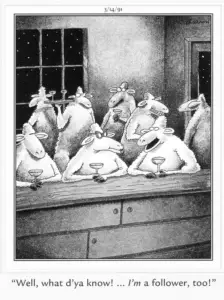
Dystopian books and films are in the zeitgeist (a German word that refers to the general spirit or mood of a particular time or place). Reflecting the often dark mood of our times, two of the greatest dystopian novels, ‘Brave New World’ and ‘Nineteen Eighty-Four’ were ahead of their time. Each book captured the nightmares of the 1930s and 40s. But which vision looks more prescient to us now in the 21st century? Are we living in George Orwell’s sinister surveillance state? Or in Aldous Huxley’s vapid consumerist culture? You decide.
From 1958, an interview with Mike Wallace. Aldous Huxley’s comments are more relevant than ever as he describes the march toward tyranny that modern Americans are now experiencing.
Hope you enjoy the message of this video. May God Bless America!
Outlawed Am3rican
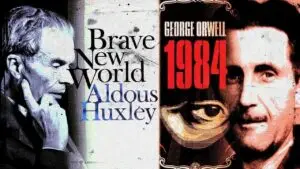
“Brave New World” and “1984″ are two classic dystopian novels that explore different forms of government control. One depicts a society ruled by fear and oppression, the other presents a world where citizens are kept compliant through pleasure and distraction, highlighting contrasting methods of tyranny.
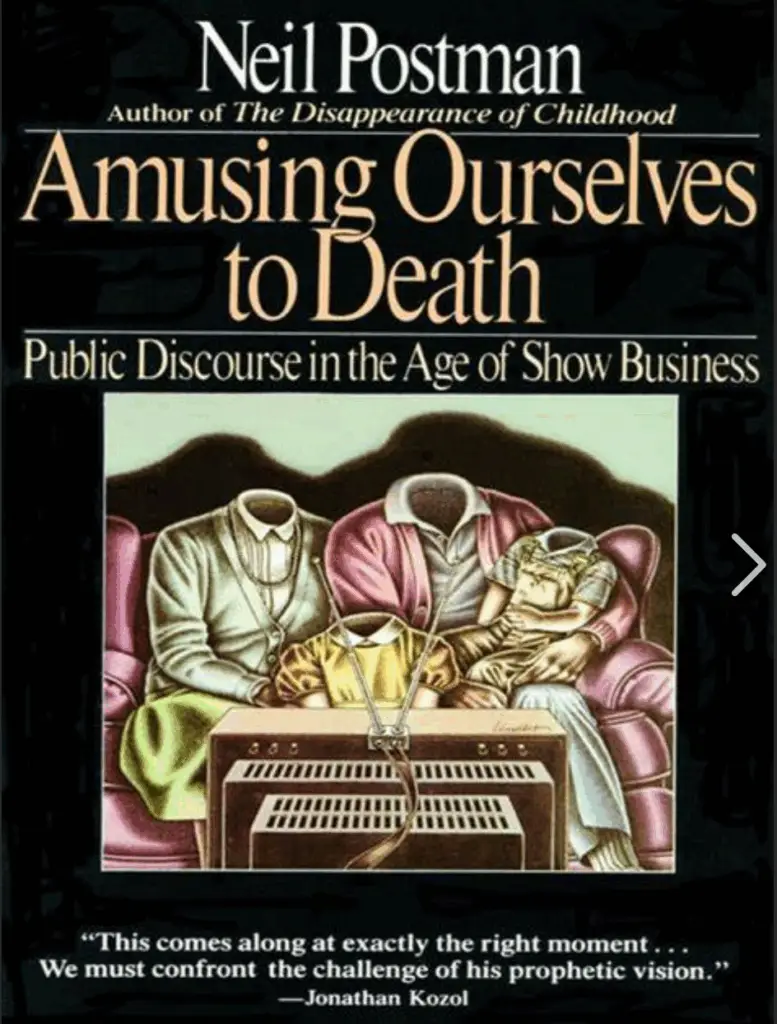
If students get a sound education in the history, social effects and psychological biases of technology, they may grow to be adults who use technology rather than be used by it. –Neil Postman
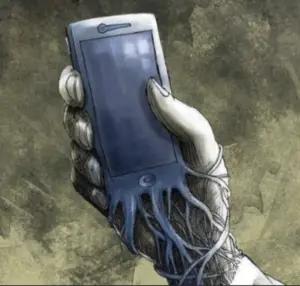
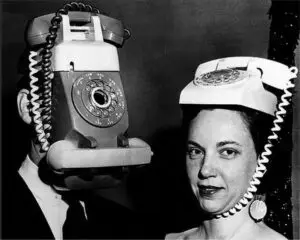
PHOTOGRAPHIC PROOF! Incredibly, around 60 years ago, well before the age of cell phones, it was known that in the future people would be attached to their phones.